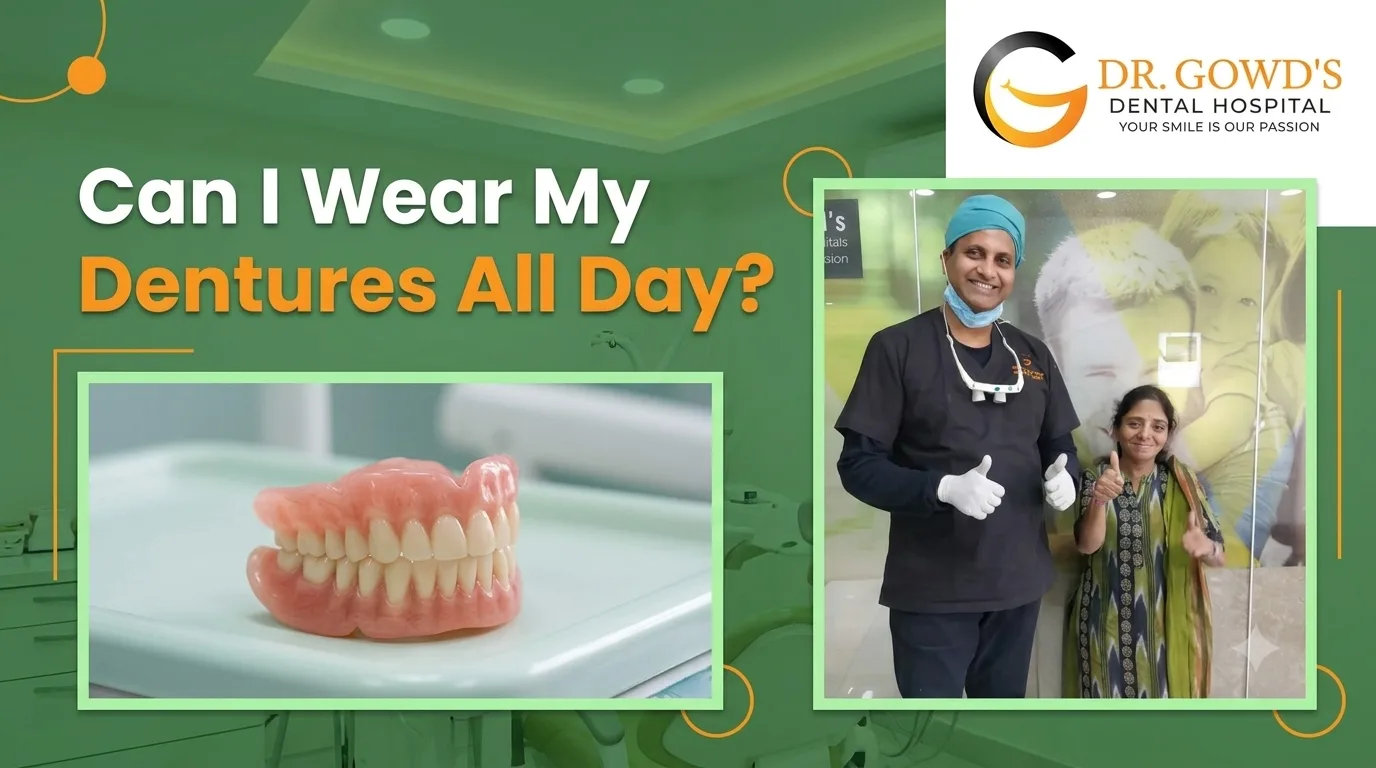
If you are considering dentures, Dr. Gowd’s Dental Hospital Hyderabad offers complete denture treatment, full dentures, partial dentures, denture adjustments, and follow-up care to restore your smile and confidence.
Yes, you can wear your dentures throughout the day once you have adjusted to them. However, it is important to remove them every night before going to bed. This gives your gums and oral tissues time to rest, reduces the risk of fungal infections (such as denture stomatitis), and helps maintain healthy oral tissues.
Tips:
- Remove dentures for at least 6–8 hours daily (preferably overnight).
- Clean your dentures thoroughly before storing them in water or a denture-cleaning solution.
- Never let dentures dry out, as they may warp.
2. Why Do My Dentures Feel Tight?
New dentures often feel tight because they fit closely against your gums to provide stability. Mild tightness during the first few days is normal. As your mouth adjusts, the feeling usually improves.
However, if the tightness causes pain, sore spots, or ulcers, do not try to adjust the denture yourself. Visit your dentist for minor adjustments.
Seek professional care if
- Pain persists beyond a few days.
- You develop ulcers or bleeding.
- The denture becomes difficult to insert or remove.
3. Is It Normal to Produce More Saliva?
Yes. Increased saliva production is one of the most common reactions when you first start wearing dentures. Your mouth temporarily interprets the dentures as a foreign object.
This usually settles within 1–2 weeks.
Helpful tips
- Swallow frequently.
- Sip water throughout the day.
- Avoid constantly removing your dentures, as this delays adaptation.
4. How Often Should I Replace My Dentures?
Most dentures last 5–8 years, although this varies depending on wear and changes in your mouth.
Your gums and jawbone gradually shrink over time, making dentures loose.
Your dentures may need
- Relining: Every 2–3 years if they become loose.
- Replacement: Every 5–8 years or sooner if they are damaged or no longer fit properly.
Visit your dentist annually for denture evaluation.
5. What Happens If I Don’t Wear My Dentures?
Not wearing your dentures for extended periods can make it difficult to adapt to them again. Your facial muscles may lose support, making your cheeks appear sunken and your lips less full.
Long-term absence of dentures can also
- Affect speech.
- Reduce chewing efficiency.
- Lower confidence during social interactions.
- Cause your dentures to feel tighter when you try wearing them again due to minor tissue changes.

6. Can Dentures Improve Facial Appearance?
Absolutely. Dentures are designed to restore not only your teeth but also the natural contours of your face.
They can
- Support your lips and cheeks.
- Reduce the appearance of a collapsed or sunken face.
- Improve your smile.
- Restore facial balance.
- Give a more youthful appearance.
Properly fitting dentures often make patients look healthier and more confident.
7. How Soon Can I Eat Normally?
Eating with dentures requires practice. Start with soft foods during the first few days.
Begin with
- Mashed potatoes
- Yogurt
- Rice
- Scrambled eggs
- Soft vegetables
- Pasta
As you become comfortable:
- Introduce firmer foods gradually.
- Cut food into small pieces.
- Chew on both sides of your mouth at the same time to keep the dentures stable.
Most patients adapt within 2–4 weeks, although complete confidence may take several months.
8. Can I Kiss While Wearing Dentures?
Yes. Well-fitting dentures should remain stable during kissing and other normal social interactions.
If you’re new to dentures:
- Start gently until you gain confidence.
- Ensure your dentures fit properly.
- If they feel loose, see your dentist for an adjustment rather than relying solely on denture adhesive.
Most people quickly become comfortable and forget they’re even wearing dentures.
9. What Should I Do If My Denture Breaks?
Do not attempt to repair your denture with household glue, super glue, or DIY repair kits. These materials may be toxic, alter the fit, and make professional repair more difficult.
Instead
- Stop wearing the broken denture.
- Keep all broken pieces together.
- Contact your dentist as soon as possible.
- If repair is not possible, a replacement may be necessary.
Prompt professional repair helps prevent further damage and protects your oral tissues.
10. What Are the Biggest Challenges for First-Time Denture Wearers?
During the first few weeks, it is normal to experience:
- Mild soreness.
- Increased saliva.
- Difficulty speaking certain words.
- A feeling of fullness in the mouth.
- Difficulty chewing harder foods.
- Minor movement of the denture during eating.
These challenges usually improve as your mouth adapts.
To make the transition easier:
- Wear your dentures as instructed.
- Practice reading aloud to improve speech.
- Eat soft foods initially.
- Maintain excellent denture hygiene.
- Attend follow-up appointments for adjustments.
Final Advice
Adjusting to dentures takes patience. Most people adapt successfully within a few weeks, while complete comfort may take 1–3 months. Regular dental check-ups, good oral hygiene, and proper denture care will help ensure your dentures remain comfortable, functional, and long-lasting.
Remember, your dentist is your best resource for any discomfort, looseness, or concerns during your denture journey